Can My Existing Warehouse Floor Support a Mezzanine?
Your warehouse floor may be able to support a mezzanine, but you cannot tell just by looking at it. What matters is the mezzanine you are planning and what will support it.
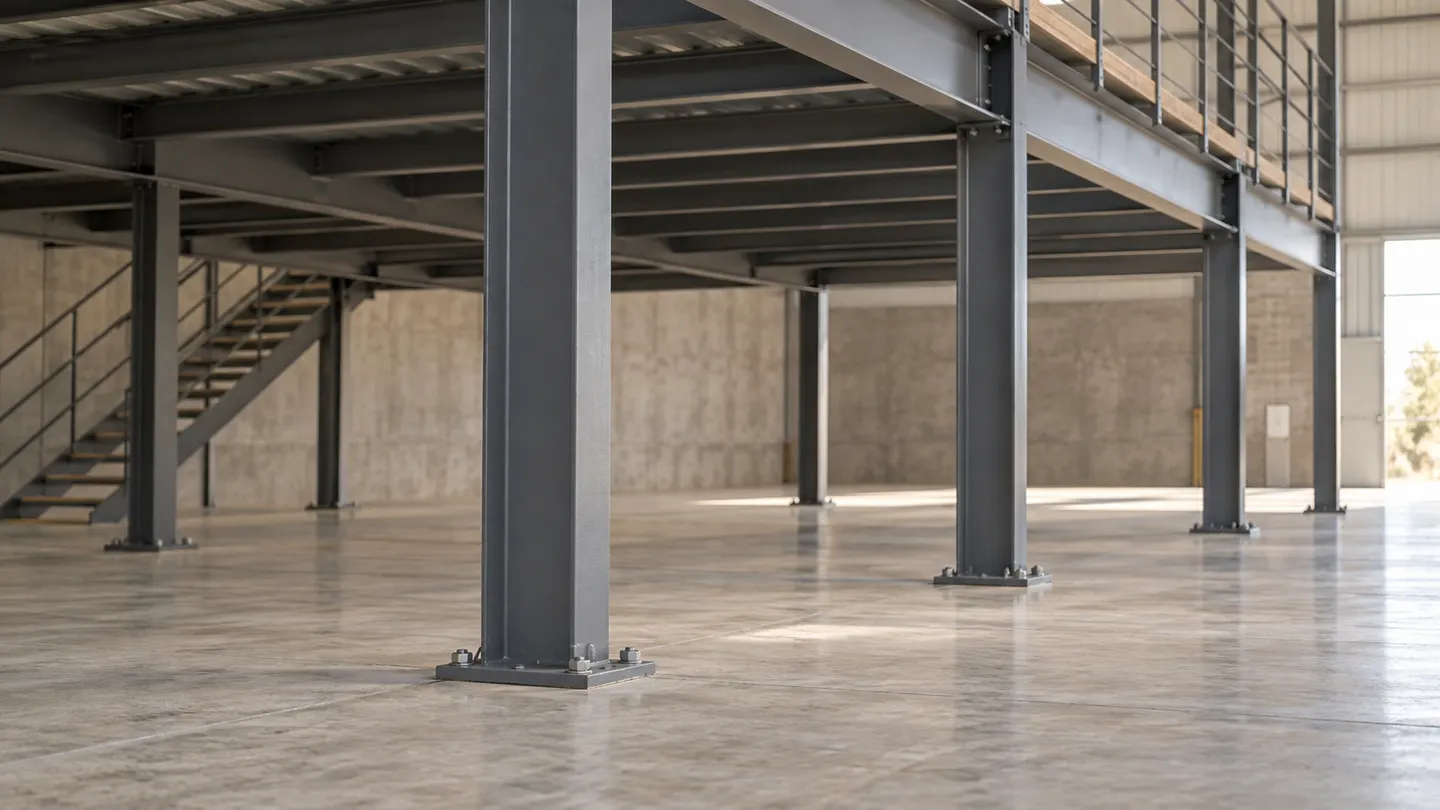
Quick Answer
Maybe, but do not decide by looking at the floor. A mezzanine puts weight at particular column or support locations, so ask a structural engineer to check the floor and what supports it for your proposal. Have any structural drawings ready. If you cannot find them, that does not automatically mean the project is impossible.
What this means for you
Before ordering steel, decide what you want to use the mezzanine for and sketch a basic layout. Show where you hope to put the columns, and gather any structural drawings you already have. Ask a qualified structural engineer to check the proposal before relying on the existing floor.
A warehouse floor may have carried stock for years without a problem. A mezzanine column puts weight onto a particular spot, rather than spreading it across the whole floor. Past use alone does not tell you whether that spot can take the new load.
Where will the weight go?
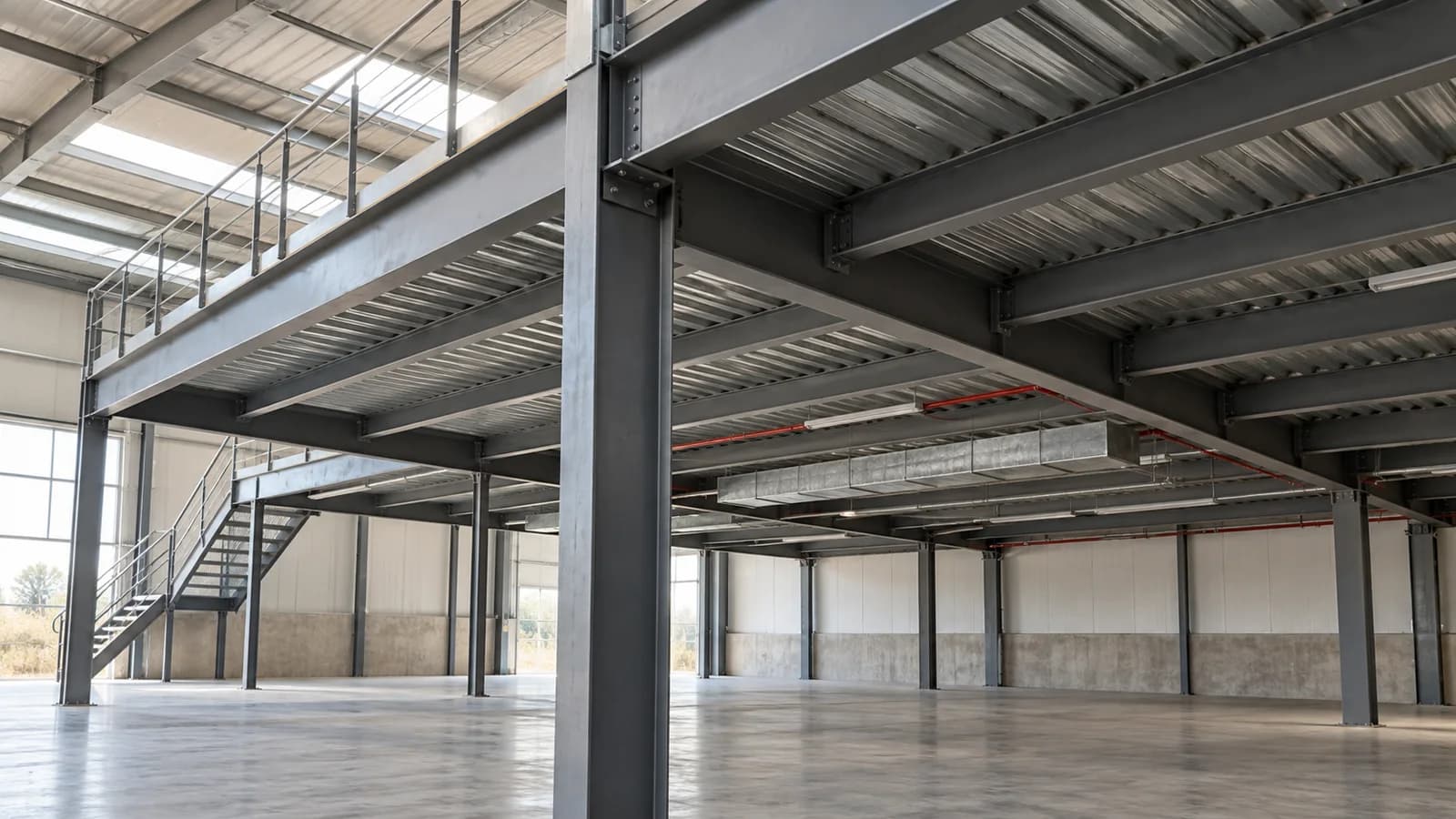
The weight passes through the mezzanine's columns or other supports, into the construction beneath them and eventually into the ground. The engineer needs to understand that whole arrangement, not just the concrete you can see.
Can the columns sit directly on the floor? Can the existing building carry the extra weight? Or does the proposal need another way of supporting it? These are different questions. Moving a column to clear a doorway can change the answer, so settle its position before installation.
A bigger steel plate under a column does not automatically solve the problem. What is beneath it still needs to be checked.
What should you gather first?
You do not need a perfect set of documents to start a conversation. Bring what you have:
- What the mezzanine will be used for, including heavy storage or equipment.
- Its approximate size and a rough layout.
- Where you would like the columns or supports to go.
- Any structural drawings, floor or foundation details, and previous calculations.
- Information about earlier alterations, openings or known underground services.
- Photos of the relevant areas, as a starting point rather than proof of strength.
Explain which drawings show the approved design and which record what was actually built. If you are unsure whether they match the warehouse today, say so. These are useful items to have for the first review. The documents needed for approval will depend on your property and the work you are planning.
What if you don't have structural drawings?
No drawings does not automatically mean no mezzanine. The engineer may be able to use other records, a site inspection and measurements to build a clearer picture. Further investigation, or a change to the proposal, may still be needed.
Let the engineer decide what investigation is appropriate. Any intrusive work should be professionally planned, including checks for buried services. Do not drill or excavate yourself to find out what is under the floor, or use a capacity figure from another warehouse.
Could I need strengthening or new foundations?
Maybe. The existing support may already work, or a different column layout may be a better fit. Strengthening or new foundations are sometimes considered too. The engineer needs to decide what works for your warehouse and the mezzanine you are planning.
The related foundations question, when available, goes into that decision separately. For now, ask the engineer what can be concluded from the information available and what still needs checking before you commit to the work.
Need help with your property?
Planning a mezzanine?
Tell us about your warehouse, where it is and what you’d like to understand.
WhatsApp MANZILMANZIL Approvals
Not sure which approvals apply to your property?
Explore general guidance for your property, planned work and location. Project-specific approvals still need verification.
Explore MANZIL ApprovalsExplore by property
More answers for the place you’re working on.





